 +64 4 002 3946

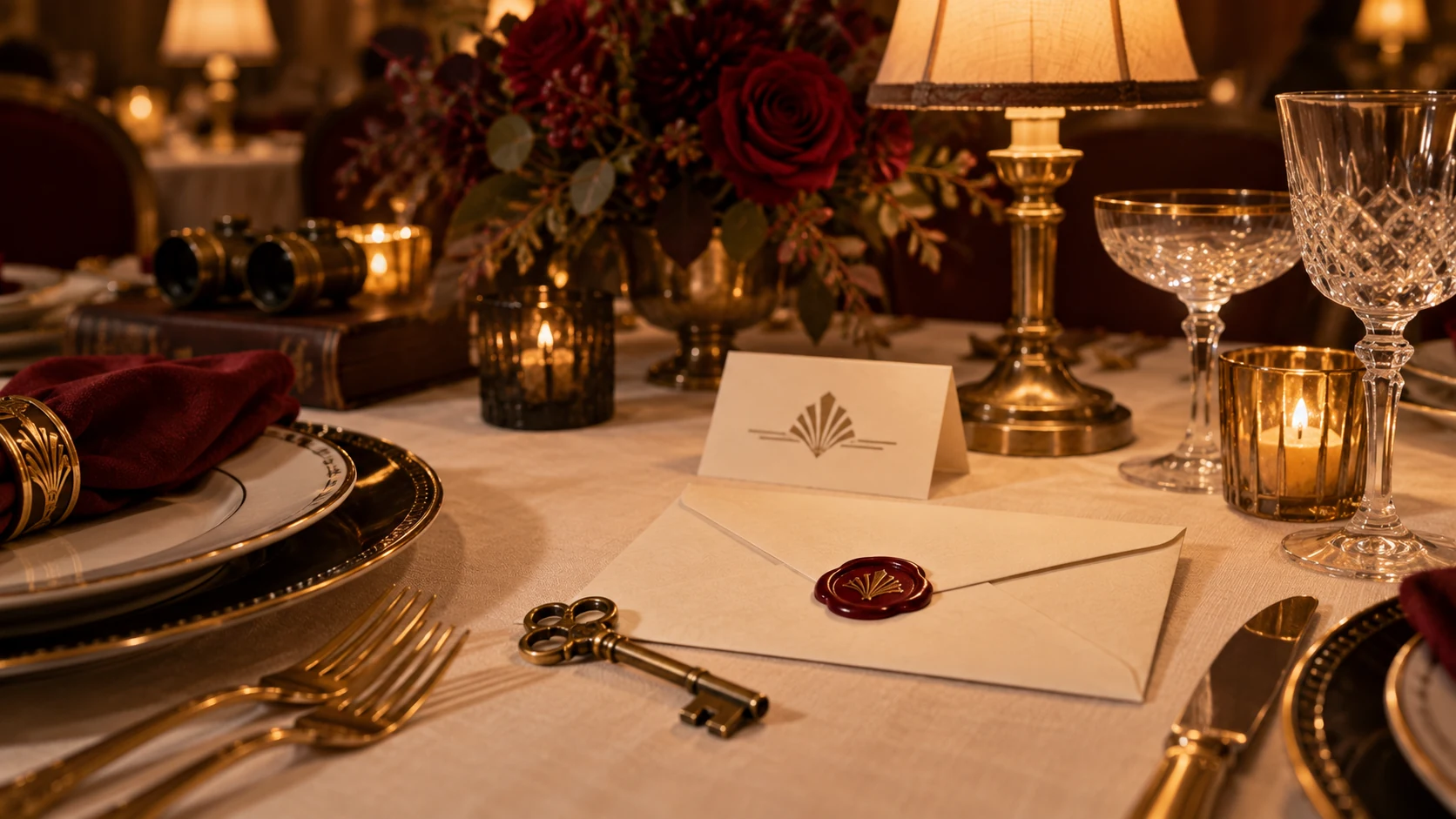
A vintage detective dinner
The detective setting can draw on Art Deco backdrops, antique-style props and character place cards. Guests receive enough information to understand their role without feeling they need to prepare a performance. We discuss whether the story should be character-led, table-led or guided primarily by the host.
Meal timing matters. Clue rounds should not compete with food being served or make guests choose between listening and eating. We build natural pauses into the programme, give the host a clear way to regain the room’s attention and keep the reveal at a sensible point in the evening.
The written scope identifies the story format, host or performer roles, materials and styling. Catering and venue hire are separately arranged unless explicitly included. If the group has content sensitivities or would prefer a lighter mystery, tell us before the story is selected so the tone can be assessed.
A quiz with a little showmanship
A television-style corporate quiz can use colourful team tables, a clear scoreboard and, where included, illuminated podiums. The host guides the rounds and keeps instructions concise. A range of topics and response styles gives different people a chance to contribute instead of relying on one specialist in each team.
Standard rounds provide a straightforward starting point. If you want a company round, we agree the source material, review the questions with your organiser and set an approval deadline. Keep the content welcoming: private jokes and personal information can leave people out or put individuals on the spot.
Sound, screen visibility and the room layout need attention. The basic starting scope assumes suitable venue AV already exists; a projector, PA system, additional displays or a stage are separate requirements. We confirm what the venue provides before relying on it in the programme.
A mission to solve together
Secret-agent challenges use coded briefcases, mission boards, hidden clues and themed puzzle stations. The activity can suit a group that likes hands-on problem-solving without a large theatrical performance. A facilitator explains the mission, supports teams when they get stuck and keeps the session moving towards a shared conclusion.
We discuss the room, the number of small teams and the practical setup. Stations should have sufficient space for people to gather, read materials and move safely between tasks. Alternative roles can help guests take part through observation, recording or coordination as well as solving clues.
This format can also sit within a wider team-building day. If you combine it with dinner or another activity, the proposal should identify the separate facilitation windows, reset time and any extra materials rather than treating everything as one continuous session.
Keep the evening easy to attend
Before the event we agree the invitation information, any character allocation, the room setup and the running order. If guests need to receive material beforehand, we discuss the minimum information needed and who will send it. You should not have to circulate a detailed guest list when a team count would be enough.
Let us know about access requirements, sound sensitivity and the group’s comfort with performance. We can discuss written instructions, smaller teams and ways to participate without speaking in front of the room. A host should help people feel included, not turn reluctance into part of the entertainment.
Send the likely date, city, guest count and the kind of evening you want. Tell us whether dinner is already arranged and what AV the venue offers. Our social event pricing explains the starting scope and additions, while the vintage dinner idea shows a possible sequence for an intimate occasion.
